Biographical Sketch
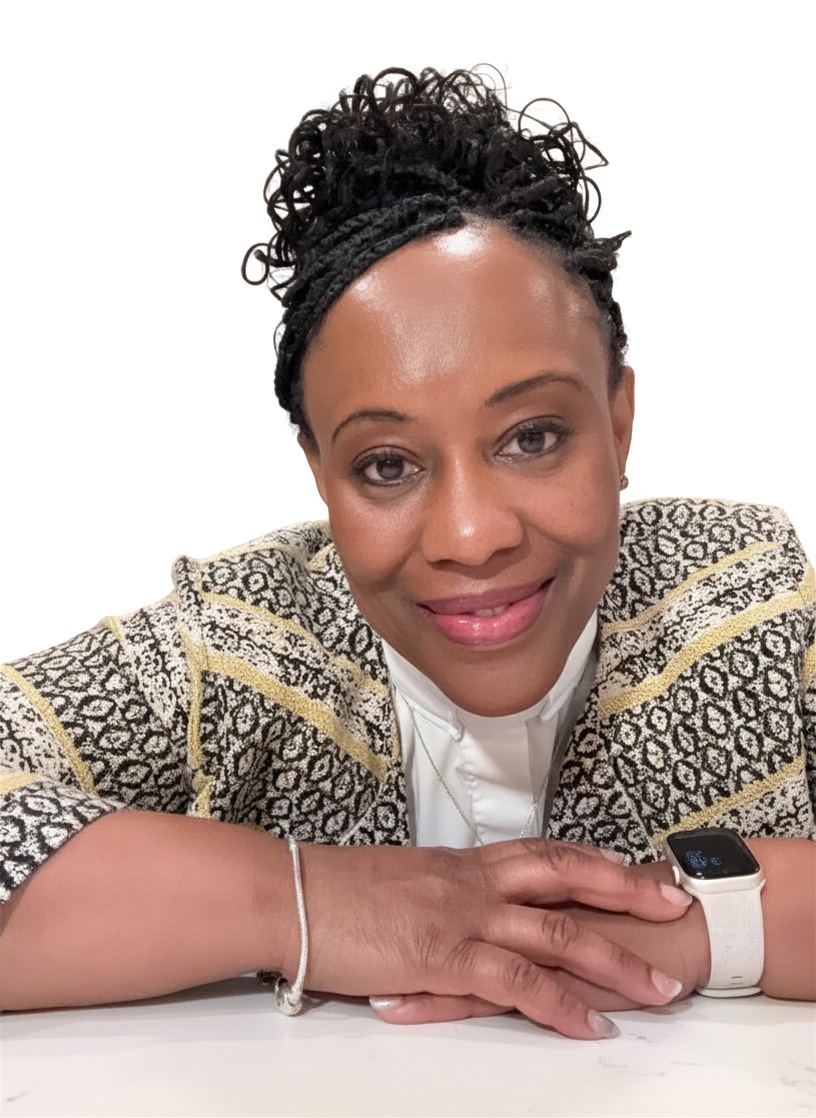
Selena Johnson, or Pastor Selena as she likes to be called, is a passionate about how faith is interpreted and applied to real world challenges. As a foundational African American woman, she brings a unique perspective on race, gender, faith and justice. She is a firm believer that we must reframe biblical interpretations away from a lens that normalizes only one culture to the detriment of others. Promoting cultural healing and the advancement of justice, especially but not exclusively in terms of race, has been her passion and calling since high school. Her prayer is that the body of Christ would celebrate diversity, equity and inclusion at a time when people are so afraid of anyone not like themselves. That is why she am not afraid to speak and preach about this issue especially as it relates to faith and the church. As a black liberation theologian, she believes that soul salvation and social justice go hand in hand. Jesus saves! He saves our souls andalso liberates us from earthly oppression. She believes that everything we do should be done in love, just as Jesus proclaimed in Matthew 22:36-40. Love of God and love of neighbor are the greatest commandments.
Even before coming to faith in Christ in a personal way and going into ministry, God was at work preveniently guiding her along the pathway to intercultural competency/cultural humility. During her lifetime, her hometown, Bridgeport, CT went from being a thriving steel-industry town to become very economically depressed city when the steel mills closed. Her father was a very prominent African American lawyer, then judge, then Appellate Court Justice and so she was raised in a solidly middle class, predominantly-white neighborhood. Typically, she was the only black child in her classrooms until the busing act came into effect. Therefore she learned to navigate diversity from a very young age. During her high school years race riots would routinely break out in the spring of each year with the Portuguese and the whites fighting the Puerto Ricans and the blacks. As a straight-A student headed towards being valedictorian of her class, she strategically avoided the skirmishes. However, this experience made her see how cultural hatred can grow and had a lasting impact on her thirst for justice and right-ness.
During her college years, she stopped attending church. However, In the early 1990’s God drew her back in while living in New York City. It was the social justice-oriented ministries of the famous Abyssinian Baptist Church in Harlem that attracted her. The black-woman owned architecture firm that she worked for in Harlem was doing some design work for the church. Through various other organizations she also became heavily involved in protesting police brutality against African Americans in that city.
When God opened her eyes to justifying grace, saving her very soul, she became very hopeful that the body of Christ was the answer to racism and inequality in America. She felt so free and presumed that her white brothers and sisters felt that freedom from earthly categorizations and castes as well. Because the bible declares that we are all one in Christ Jesus and vividly assures us that each person is of sacred worth to God, her mind reasoned that Christians should be inherently anti-racist. This prompted her to write her first book, The Sin of Racism: How to be Set Free, which was published in 2006. However, after moving through phases and stages of sanctifying grace, including her seminary journey, the political turns and twists in America, and the racially-charged incidences and climate - her current understanding is that, sadly, it has historically been the Christians in America that have promoted the most racially biased politics, politicians and policies.
She has been blessed to serve under appointment in the Baltimore-Washington Conference of the United Methodist Church since 2012. The four very unique and wonderful congregations she has served have honed her skills in community and relationship building - even across lines of racial differences. Her first full-time appointment was cross-racial. One month into appointment to this predominantly white congregation, Michael Brown was shot and killed by police in Ferguson, Missouri. Massive protests erupted and that town was set ablaze. She was compelled to preach about racial inequality and the reasons behind these protests. The church also had a series of after-church discussion about this topic. At her second appointment, which was multi-cultural, another series of high-profile police shootings occurred including the murders of Alton Sterling and Philando Castile in the same week. That church also had to discuss the issue. Additionally, she took a group together to the Women’s March, which was not supported by all in the church but was an important justice statement and stand for her.
She went on to serve as senior pastor at Mt. Zion UMC (Georgetown) in Washington, DC, a predominantly black congregation, where she was appointed in July of 2019. Mt. Zion, founded in 1816, is the oldest African American congregation in the nation’s capital! God gave her a vision of promoting this church through its powerful history. Under her leadership, they were able to create a docudrama, “Celebrating Freedom,” highlighting the journey towards justice of the church. Through community relationships, they were also able to get $750,000 in capital improvement grants, including the prestigious Sacred Places Award. During her years there, she has lead Mt. Zion in partnering with several Georgetown Churches to give free meals to their shelter-challenged neighbors through the Saturday Supper program. The church also became a member of the advocacy group, DC POWER (People Organized for Wealth, Equity and Respect), where she serve as a charter member. She is also the chair of the Georgetown Cluster of African American Churches, a multi-denominational group that worships together on Good Friday and raises money for scholarships.
These are just a few of the highlights of her life that have shaped her outlook and vision for social justice. God has uniquely positioned me and given her visions and dreams at such a time as this to build beloved community: a place where disenfranchised children can thrive and flourish into the fullness of who God created them to be, a place where senior citizens in underserved communities can feel safe, loved and honored, and a place where all adults are productive, resilient, and thriving.